By Daniel Kanu
The Our Water Our Right Africa Coalition (OWORAC) has strongly opposed moves to privatise water resources across the continent, warning that such policies would further deny poor communities access to safe and affordable water, while worsening the burden on women and girls.
The coalition, a network of civil society organisations, grassroots communities and trade unions across Africa, reiterated its stance against what it described as the growing corporate capture of water systems, insisting that water must remain a public good accessible to all.
Speaking at a press conference in Lagos to commemorate the World Water Day 2026, themed “Water and Gender,” OWORAC criticised what it called the continued neglect of publicly managed water infrastructure by governments.
It noted that many African countries are increasingly embracing privatisation models that have led to soaring tariffs, labour rights violations and weak regulatory oversight.
In a joint statement endorsed by organisations including the Senegalese Water Justice Network, Nigeria’s Corporate Accountability and Public Participation Africa (CAPPA), the Ghana Water Citizens Network and Revenue Mobilisation Africa, the coalition stressed that this year’s theme highlights the urgent need to address gender disparities in access to water.
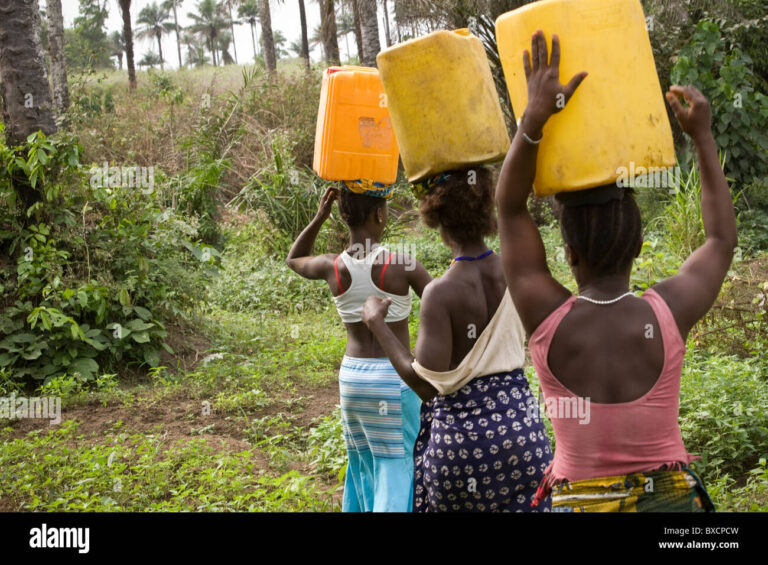
Delivering the statement on behalf of the coalition, Fatou Diouf of the Senegalese Water Justice Network said women and girls remain the most affected by water shortages, often forced to travel long distances to secure water for household use.
“As the world marks World Water Day, we must confront two major drivers of the global water crisis: entrenched gender inequality and corporate profiteering,” she said. “Across Africa, women and girls pay the highest price when governments hand over public water systems to private entities.”
OWORAC cited global data indicating that billions of people still lack access to safely managed drinking water, noting that the impact of this crisis is unevenly distributed, with women and girls disproportionately affected due to their traditional roles in water collection and household management.
The coalition also raised concerns over reports that the Zimbabwean government is considering scrapping the Zimbabwe Gender Commission, describing the move as ill-timed and potentially harmful to gender equality efforts.
According to the group, dismantling such an institution at a time when the global community is recognising the intersection between water access and gender equity would undermine progress and further silence women’s voices in policy-making.
“The Commission has served as a critical platform for advocating women’s rights and access to essential services, including water. Weakening it risks deepening the marginalisation of women in decisions that directly affect their livelihoods,” the statement added.
Highlighting the real-life implications of water scarcity, Mary Peluola, Director of Projects at the Women Advocates Research and Documentation Centre, recounted a personal experience during childbirth at a Lagos general hospital, where a prolonged power outage led to an acute water shortage.
“I had to call my husband to bring gallons of water from home,” she said, underscoring the fragility of public water systems and their impact on healthcare delivery.
Other speakers at the event, including CAPPA’s Assistant Executive Director, Zikora Ibeh, and Programme Officer for Water, Segun Olufemi, condemned the increasing commercialisation of water services, arguing that profit-driven models often exclude vulnerable populations.
Participants joining virtually from Senegal, Kenya and Zimbabwe echoed similar concerns, lamenting that public service considerations are being overshadowed by profit motives in water governance across the continent.
OWORAC called on African governments to prioritise investment in public water infrastructure, strengthen regulatory frameworks and ensure inclusive policies that recognise water as a fundamental human right rather than a commodity.
The coalition further urged policymakers to adopt gender-responsive approaches in water management, noting that sustainable solutions to the water crisis must address the unique challenges faced by women and girls.